Harvest Pressure and Financial Risk: Navigating Late October Grain Markets
U.S. grain markets face intense harvest pressure and shifting global demand, requiring farmers to balance immediate cash flow with long term risk management.
Agrodity quick take
U.S. grain markets are currently navigating a period of heavy harvest pressure, with elevated commercial ownership at local elevators and significant volatility in futures. Farmers are balancing the need for immediate cash flow against the reality of a complex global export environment, making strategic marketing more critical than ever.
What's happening
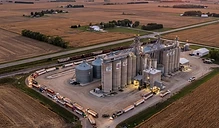
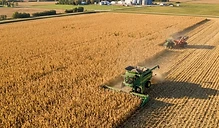
- Harvest progress continues to move significant volumes of corn and soybeans into the supply chain, leading to increased commercial ownership at local elevators.
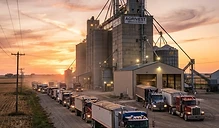
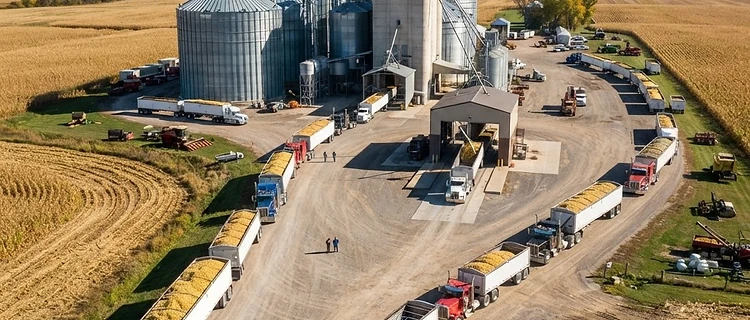
- Grain elevators report that producers are selling aggressively to secure cash flow, often delivering directly against contracts rather than utilizing traditional storage.
- Global export demand remains competitive, with South American supplies and geopolitical uncertainty in the Black Sea region influencing U.S. export competitiveness.
- Financial pressures, including high input costs and margin call exposure, are driving faster grain movement and influencing local basis levels.
- Crop insurance harvest prices for 2026 have provided a necessary safety net, offering higher revenue guarantees than spring projections for the first time in several years.
Why it matters for grain marketing
The current market environment is defined by a disconnect between large domestic supplies and the logistical challenges of moving that grain to end users. With elevators holding higher than normal inventory, local basis levels are under pressure, and transportation capacity is becoming a bottleneck. Farmers who rely on immediate harvest sales may find themselves at the mercy of these localized logistical constraints.
Furthermore, the shift toward domestic biofuel demand and the changing nature of international trade, particularly with China, means that traditional export models are evolving. Farmers must look beyond simple cash sales and consider how their storage and delivery decisions impact their overall risk profile in a market where global supply chains are increasingly fragile.
Agrodity playbook
- Evaluate your storage capacity versus the cost of carry to determine if holding grain for a potential basis improvement is financially viable for your operation.
- Review your crop insurance revenue guarantees, as current harvest prices may offer a stronger floor than anticipated for your 2026 production.
- Communicate closely with your local elevator regarding logistics and freight availability to avoid delivery delays that could impact your cash flow.
- Consider using futures or options to maintain market exposure if you choose to sell at harvest, allowing you to participate in potential price rallies later in the marketing year.
- Monitor regional basis trends closely, as localized supply gluts can create significant price disparities between nearby delivery points.