Export Demand and Harvest Progress: Navigating November Grain Markets
As the U.S. harvest nears completion, farmers must balance record production against emerging export opportunities and global supply chain constraints.
Agrodity quick take
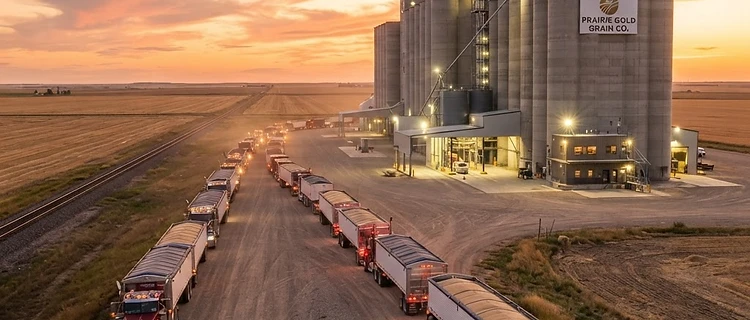
The U.S. harvest is wrapping up at a record pace, putting significant pressure on local basis levels as bins fill across the Corn Belt. While domestic supply is abundant, recent surges in export commitments to Mexico and China provide a necessary floor for prices, making logistics and timing your sales critical for the remainder of the year.
What's happening
- The U.S. soybean harvest reached 88 percent completion by early November, tracking ahead of the five-year average.
- Export activity remains a bright spot, with recent private sales announcements confirming significant corn and soybean shipments to Mexico, China, and South Korea.
- Global logistics are tightening, as record fuel surcharges impact rail and barge rates, complicating the movement of grain to export terminals.
- Ukraine faces record ending stocks due to ongoing conflict, which continues to limit their export capacity and keeps global eyes on U.S. supply availability.
- Traders are currently positioning ahead of the upcoming USDA WASDE report, looking for adjustments to production and ending stock estimates.
Why it matters for grain marketing
For the American farmer, the current market is a tug of war between record domestic yields and the potential for a demand surprise. While the sheer volume of the harvest is weighing on cash prices, the consistent export demand suggests that buyers are actively seeking U.S. origin grain to fill supply gaps. The key for your operation is to monitor local basis closely, as the cost of transportation and storage is currently elevated by record fuel surcharges.
Furthermore, the geopolitical situation in the Black Sea region remains a wildcard. If global supply chains continue to face disruptions, the U.S. may see an even greater reliance on its exports. Farmers should avoid panic selling during the post-harvest glut and instead look for windows where export demand creates localized basis strength.
Agrodity playbook
- Audit your storage capacity and local basis levels to determine if holding grain for a potential winter rally is more profitable than selling into the current harvest pressure.
- Monitor daily USDA export sales reports to identify which commodities are seeing the most consistent international interest, as this often signals where the next price support will emerge.
- Factor in the record rail and barge fuel surcharges when calculating your net return on delivery, as these costs are currently eroding margins for those shipping to distant terminals.
- Use the upcoming WASDE report as a benchmark to re-evaluate your marketing plan, ensuring your sales targets align with updated national yield and ending stock projections.