August Disconnect: Black Sea Flares and River Realities Challenge the Big Crop Narrative
While futures markets focus on record yield projections, physical grain participants must navigate escalating Black Sea risks and tightening river logistics.
Agrodity quick take
The market is currently fixated on potential record corn and soybean yields, but physical players should keep their eyes on the growing disconnect between the board and the bin. With geopolitical flares in the Black Sea and emerging draft restrictions on the Mississippi, securing basis and logistics will be more critical than chasing daily futures swings ahead of the August WASDE.
What’s happening
- Black Sea Escalation: Recent strikes on dry-cargo vessels serving Ukrainian ports have re-injected a risk premium into wheat futures, with SRW and HRW seeing technical buying after hitting three-week lows.
- Crop Conditions Slip: The USDA's latest Crop Progress report shows corn ratings at 61% Good-to-Excellent, a 2-point drop that contrasts sharply with private analysts’ high-yield estimates of 189 bu/acre.
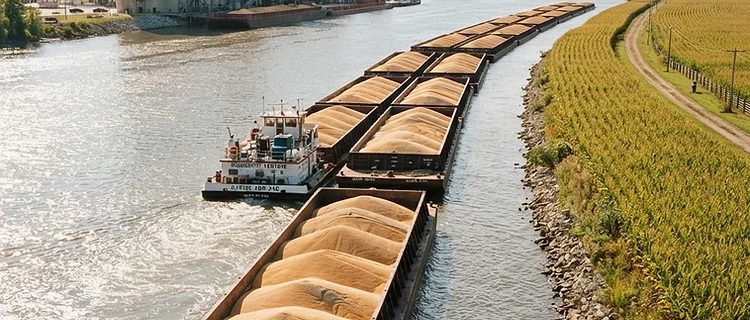
- Logistics Bottlenecks: Low water levels on the Mississippi River are prompting initial discussions of barge draft restrictions, which historically widen basis as transportation costs for the Gulf export path increase.
- Soybean Demand Surge: The USDA recently confirmed a flash sale of 488,000 tons of soybeans to China for the 2026/27 cycle, signaling that international buyers are beginning to step in at current price levels.
- Sorghum Strength: Export inspections remain robust, led by steady demand from Mexico, providing a floor for sorghum basis in the Southern Plains.
Why it matters for grain marketing
For the U.S. farmer, the coming weeks represent the "August Disconnect." While the futures market is pricing in a massive crop, the physical reality is being shaped by how, and if, that grain can move. If river levels continue to decline, the cost of moving grain to the Gulf will spike. This often results in a "basis trap" where futures may rally on global news (like Black Sea strikes), but local cash prices stay flat or even decline because elevators can't find affordable freight to move the volume.
Furthermore, the divergence between dropping crop ratings and record-high yield projections creates a volatile environment for the August 12 WASDE report. Buyers are looking for a reason to stay patient, but the combination of Chinese flash sales and geopolitical instability suggests that the "bottom" may be more sensitive to supply shocks than the current record-crop narrative implies.
Agrodity playbook
- Secure River Basis Early: If you are in a river-dependent draw area, consider locking in basis for a portion of your expected harvest delivery now before potential low-water surcharges widen the spread further.
- Utilize Wheat Rallies: Use the current geopolitical bounce in wheat to clear out remaining old-crop inventory, as high global production costs may limit the upside of these risk-driven rallies once shipping lanes stabilize.
- Audit On-Farm Storage: With record yields possible but logistics uncertain, ensure your on-farm storage is ready to hold grain through the October/November rush to avoid being forced into a "weak basis" sale at the peak of harvest.
- Monitor the August 12 WASDE: Watch specifically for any revisions to harvested acreage; a downward shift in acres combined with slipping crop ratings could spark a significant short-covering rally in corn and beans.