Weather Volatility and Export Shifts: Navigating Late Season Grain Markets
As harvest approaches, U.S. grain markets are balancing shifting weather forecasts against evolving export demand and global supply constraints.
Agrodity quick take
U.S. grain markets are currently caught between the tail end of weather-driven volatility and the reality of shifting global export demand. While recent forecasts have moderated, producers should remain alert to how late-season heat and international trade developments impact basis levels as we move toward harvest.
What's happening
- Weather models have shifted from earlier projections of a hot, dry July to a more moderate outlook, though crop development remains sensitive to late-season heat.
- Global wheat production is facing a defensive outlook, with U.S. harvest projections down 21 percent compared to the previous season.
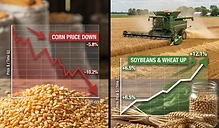
- Export data shows a mixed landscape, with wheat shipments hitting marketing-year highs while corn and soybean volumes remain sensitive to fluctuating demand from key partners like China and Mexico.
- Geopolitical tensions in the Black Sea and Middle East continue to provide a floor for wheat prices, as traders monitor potential logistics disruptions.
Why it matters for grain marketing
The current market environment is defined by a tug-of-war between domestic production potential and global supply tightness. For the U.S. farmer, the primary challenge is managing basis risk in a market that reacts sharply to every USDA report and export sales update. With global demand projected to outpace production in the 2026/27 season, any localized weather event or trade policy shift can create sudden, localized opportunities for those with storage capacity.
Producers must look beyond the futures board and monitor local basis trends closely. As harvest nears, the ability to hold grain or move it to specific export-oriented buyers could be the difference between breaking even and capturing a premium in a volatile, supply-constrained environment.
Agrodity playbook
- Audit your storage capacity now to ensure you have the flexibility to hold grain if local basis levels weaken during the peak of harvest pressure.
- Monitor weekly USDA export sales reports to identify which commodities are seeing the strongest demand from international buyers like Japan, Mexico, and South Korea.
- Review your crop insurance coverage and hedging strategies to ensure they align with current yield expectations and input cost realities.
- Maintain open communication with your local elevator or broker to track regional basis shifts, which often provide better signals than national futures trends during harvest.