Record Yields vs. River Realities: Marketing 2026 Harvest Grain
Record corn and soybean projections are meeting extreme river logistics hurdles. Here is how to manage basis and storage as the 2026 harvest supply wall hits.
Agrodity quick take
U.S. grain markets are bracing for a massive supply wall as the USDA projects near-record production for both corn and soybeans this season. While futures are finding support from geopolitical tensions, a looming logistical bottleneck on the Mississippi River threatens to widen basis and choke off harvest movement.
What's happening
- Record Production Projections: The latest USDA figures for the 2026/27 marketing year peg U.S. corn production at a staggering 16 billion bushels with yields holding steady at 183 bushels per acre.
- Soybean Surge: Soybeans are on track for their largest crop in history at 4.475 billion bushels, driven by a 53-bushel-per-acre trendline yield.
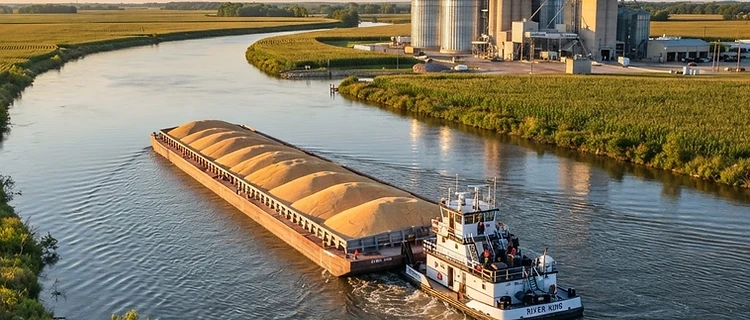
- River Logistics Crisis: Persistently dry conditions in the Upper Mississippi Basin have triggered draft and tow-size restrictions. Barge rates at St. Louis have recently spiked, mirroring 2024's volatility, as navigable space narrows.
- Futures Snapshot: December 2026 corn is trading near $4.87 per bushel, while November 2026 soybeans are hovering around $12.53. In contrast, the wheat market is seeing support from production shortfalls in Europe and ongoing Black Sea uncertainty.
- Trade Speculation: Markets are also reacting to potential trade shifts ahead of the September meeting between President Trump and President Xi, which could impact fourth-quarter export demand.
Why it matters for grain marketing
For the American farmer, this is a classic "supply wall" scenario. When massive production meets a constrained transportation system, the result is almost always a widening basis at the local elevator. If you cannot move grain to the Gulf efficiently, the cost of carry falls back on the producer. With record soybeans and the second-largest corn crop in history both coming to head, storage space will be at a premium by mid-October.
Furthermore, the disconnect between futures and cash prices is likely to grow. While global geopolitical concerns might provide a floor for CBOT futures, they do little to help the local cash bid if the barges aren't moving. Marketing in this environment requires a shift from chasing flat-price rallies to aggressive management of basis and physical logistics.
Agrodity playbook
- Lock in Basis Now: With river levels expected to stay low through September, lock in a basis level for at least 25% of your expected harvest delivery to avoid getting caught in a "no-bid" situation at peak harvest.
- Prioritize Storage Cleanout: Given the record yield estimates, on-farm storage is your most valuable asset. Ensure all old-crop carryover is moved before the first frost to maximize your flexibility.
- Diversify Delivery Points: Use the Agrodity marketplace to scout bids from regional ethanol plants and domestic crushers who aren't dependent on river logistics; their basis may hold firmer than export-heavy terminals.
- Monitor the September Trade Summit: Any breakthrough in U.S.-China trade relations could provide a late-season soybean rally. Keep a portion of your crop unpriced but protected with cheap out-of-the-money put options to capture that potential upside.