Late Season Weather and Export Demand Shape Harvest Strategy
As harvest accelerates, farmers must balance yield results against shifting export demand and storage capacity to optimize their grain marketing strategy.
Agrodity quick take
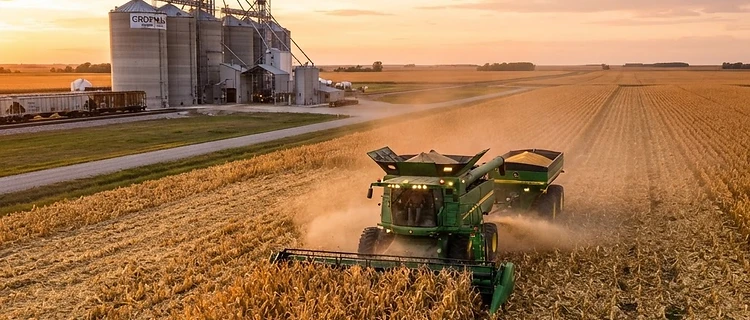
Harvest is moving at a steady clip, revealing yield data that is largely meeting expectations, even as late season weather impacts local moisture levels. Producers should prepare for tightening basis in specific regions as the influx of new crop grain tests local storage and logistics infrastructure.
What's happening
- Corn and soybean harvest progress is aligning with historical averages, with high volume throughput beginning to pressure local basis levels.
- Export demand remains a critical variable, with recent reports showing competitive pricing for U.S. corn and soybeans on the global stage.
- Weather patterns have shifted, providing favorable conditions for field work in most areas, though some regions are dealing with excessive moisture that affects grain quality.
- Input costs for the upcoming season are being weighed against current cash prices, prompting producers to evaluate their break even points carefully.
Why it matters for grain marketing
For farmers, the intersection of record or near record supply and steady export demand creates a challenging pricing environment. While futures markets are currently digesting the volume of the harvest, local basis is the primary lever that will dictate profitability this season. Understanding your specific regional logistics constraints is now as important as watching the Chicago Board of Trade.
Buyers and brokers are seeing a shift where local storage availability is becoming the bottleneck, rather than just the raw volume of production. Managing your sales around these logistical realities can help you capture premium prices when the market experiences temporary localized supply shortages.
Agrodity playbook
- Monitor local basis trends daily to identify windows where your elevator needs to fill space, as these offer the best cash price opportunities.
- Evaluate your current storage capacity; if you have on farm storage, consider holding grain to avoid the seasonal price lows often seen at the peak of harvest pressure.
- Analyze your specific cost of production per bushel, including logistics and storage fees, to set clear targets for forward contracting or spot sales.
- Communicate proactively with your local grain buyer or broker regarding your delivery timeline to ensure you have a guaranteed place to offload during high traffic windows.